



The National Monument in the Heart of the Capital
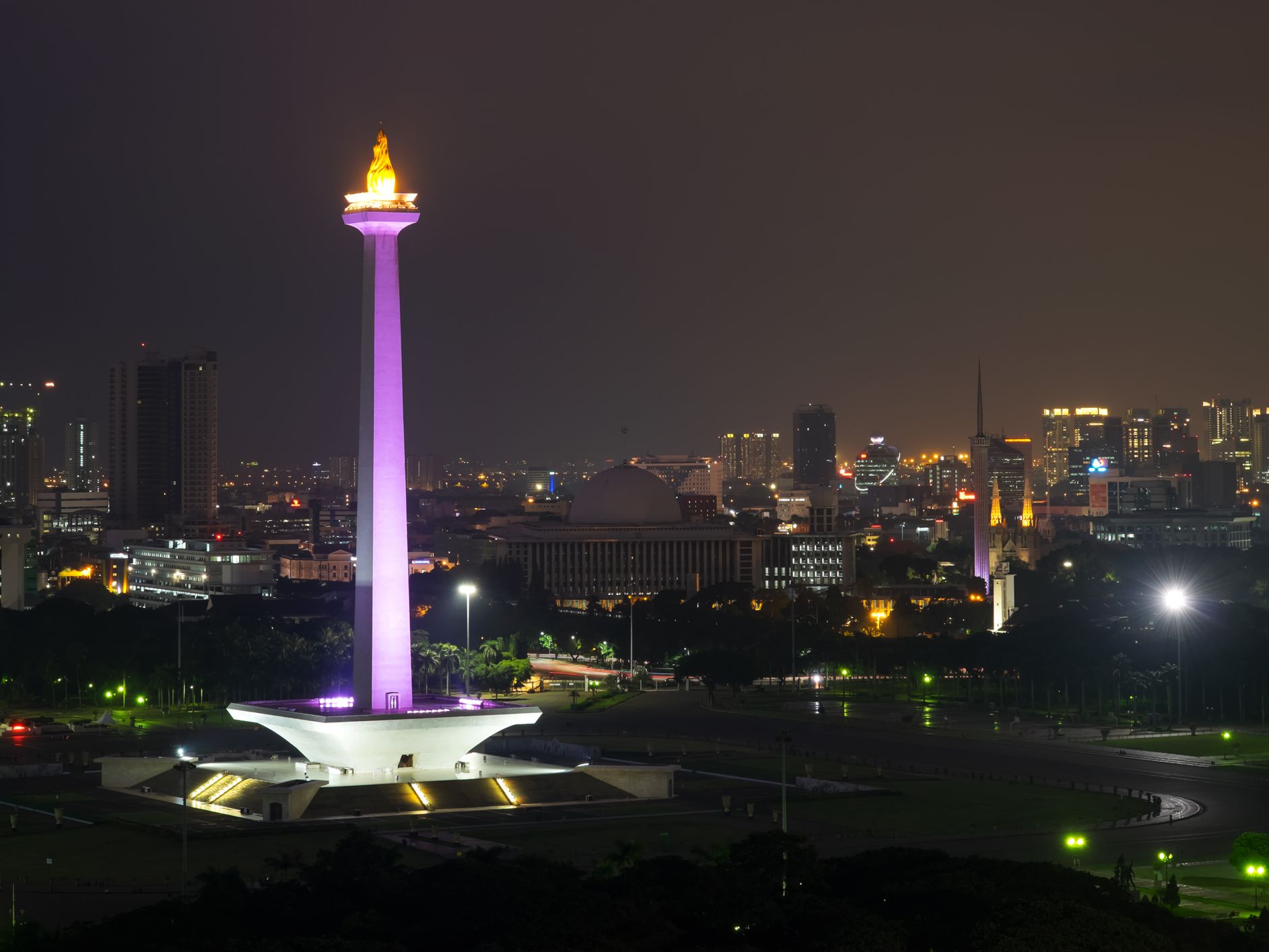
The National Monument or in Indonesian: Monumen Nasional, abbreviated Monas is a 132 meters monument in the centre of the capital of Indonesia. Located in Merdeka Square, Central Jakarta, it is the national monument of the Republic of Indonesia, built to commemorate the struggle for Indonesian independence. The construction began in 1961 under the direction of President Sukarno. Monas was opened to the public in 1975. The top of Monas is a flame covered with gold foil.
The Background
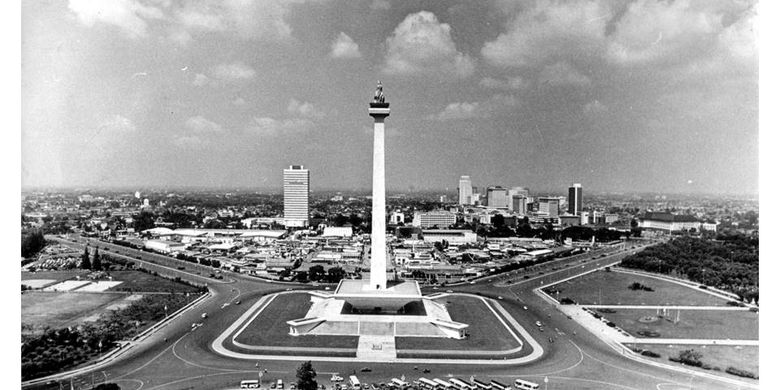
After the Indonesian government returned to Jakarta from Yogyakarta in 1950 following the Dutch recognition of Indonesian independence, President Sukarno began to consider building a national monument comparable to the Eiffel Tower on the square in front of the Presidential Palace.
In 1954, a National Monument Committee was formed and held a design competition for the construction in 1955. A design by Frederich Silaban met all the criteria included a long-lasting building reflecting the character of Indonesia. However, Sukarno did not like the design as he wanted the monument to be in the form of a linga and yoni. But the new design was for a very large monument and it was unaffordable due to the economic condition at that time.
Silaban suggested delaying the construction until the economy improved instead of designing a smaller monument. Sukarno then asked the architect R.M. Soedarsono to continue with the design. Soedarsono incorporated the numbers 17, 8 and 45, depicting the 17 August 1945 Proclamation of Indonesian Independence, in the dimensions of the monument. The National Monument was then built on 17 August 1961, in an area of 80 hectares, designed by Frederich Silaban and Soedarsono.
The Monument Design and Construction

The Monument captures the philosophy of linga and yoni, the two important traditional Indonesian tools. They symbolize harmony, balance, fertility and eternal life.
The monument consists of a 117.7 meters obelisk on a 45 meters square platform at a height of 17 meters, the goblet yard. The obelisk itself is clad with Italian marble. The northern pond was designed to cool water for the air conditioning system as well as to enhance the beauty of the area. There is also a statue of Indonesian national hero Prince Diponegoro by Italian sculptor Cobertaldo.
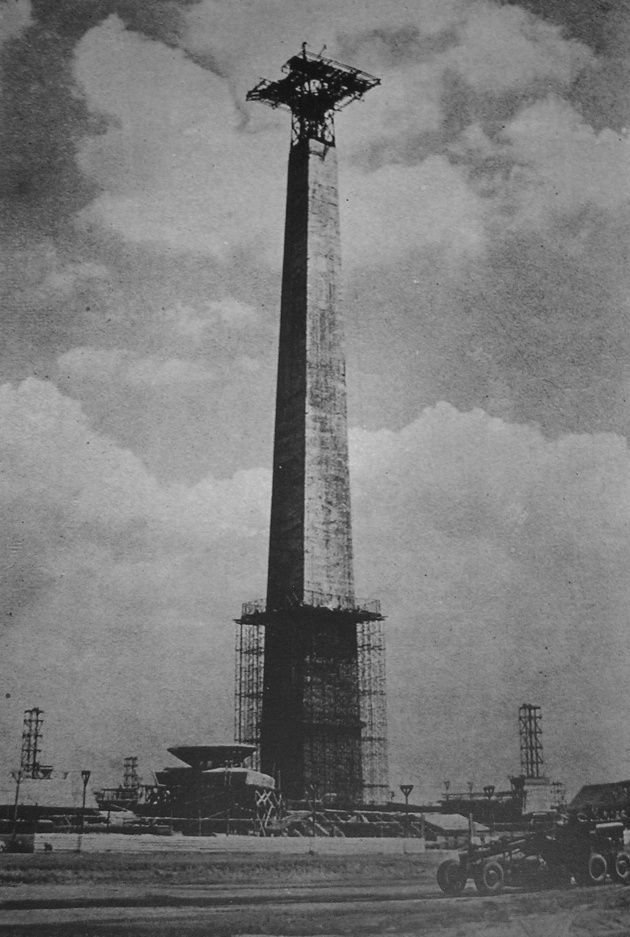

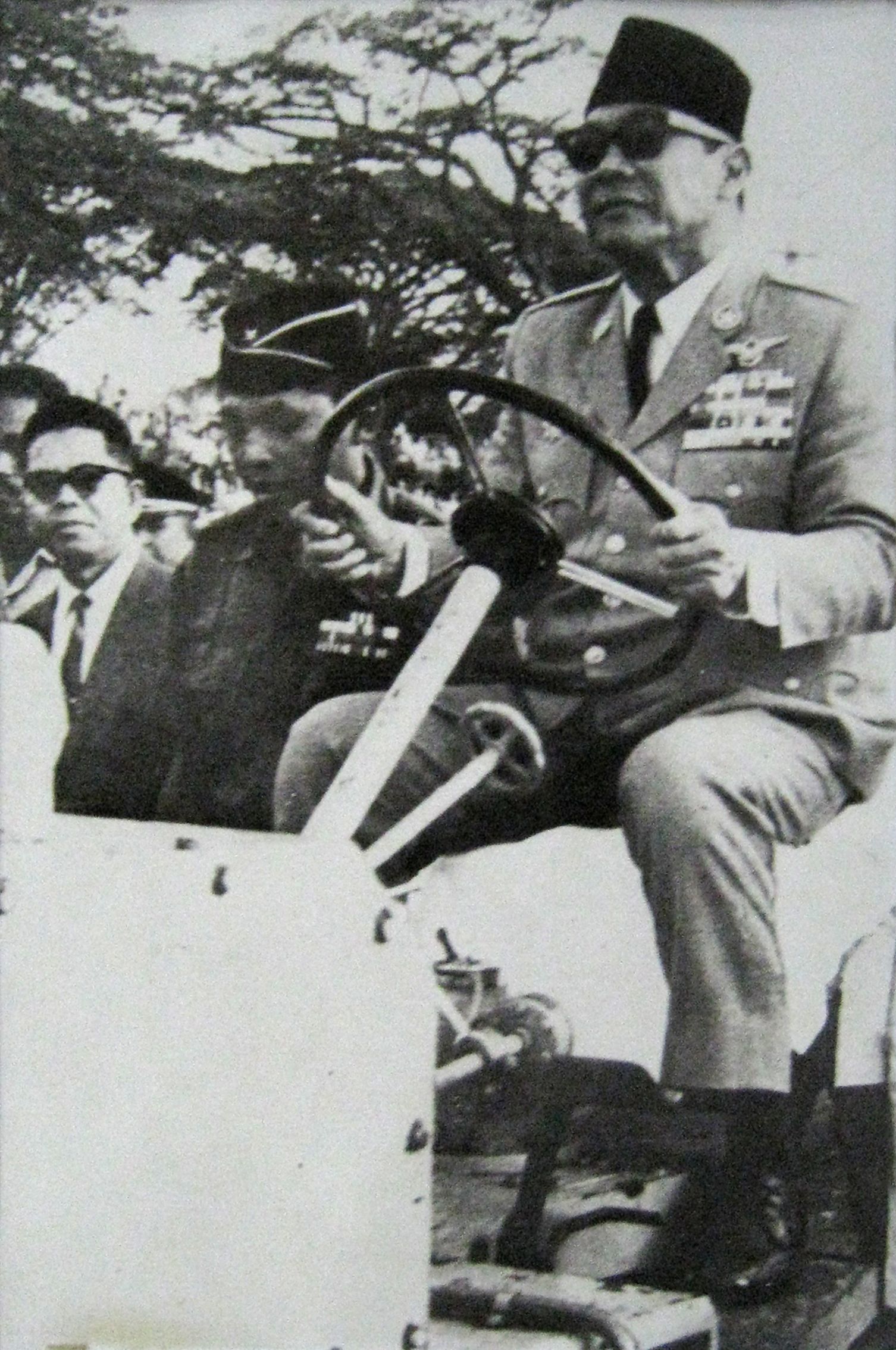
The construction of Monas occurred in three stages. From 1961 to 1962 and 1964 to1965, the first period began with the official ceremony of the first concrete pile driven in led by Sukarno on 17 August 1961. A total of 284 piles were used for the foundation block and then a further 360 piles for the museum foundation, completed in 1962.
From 1966 to 1968, the second stage was delayed by shortages of funding and the incident of the 30 September Movement. In the final phase, from 1969 to1976, the dioramas for the historical museum were added. After the completion, there was a remaining problem with water leaking to the museum. Finally, Monas was officially opened to the public on 12 July 1975.
The Reliefs of Indonesian History
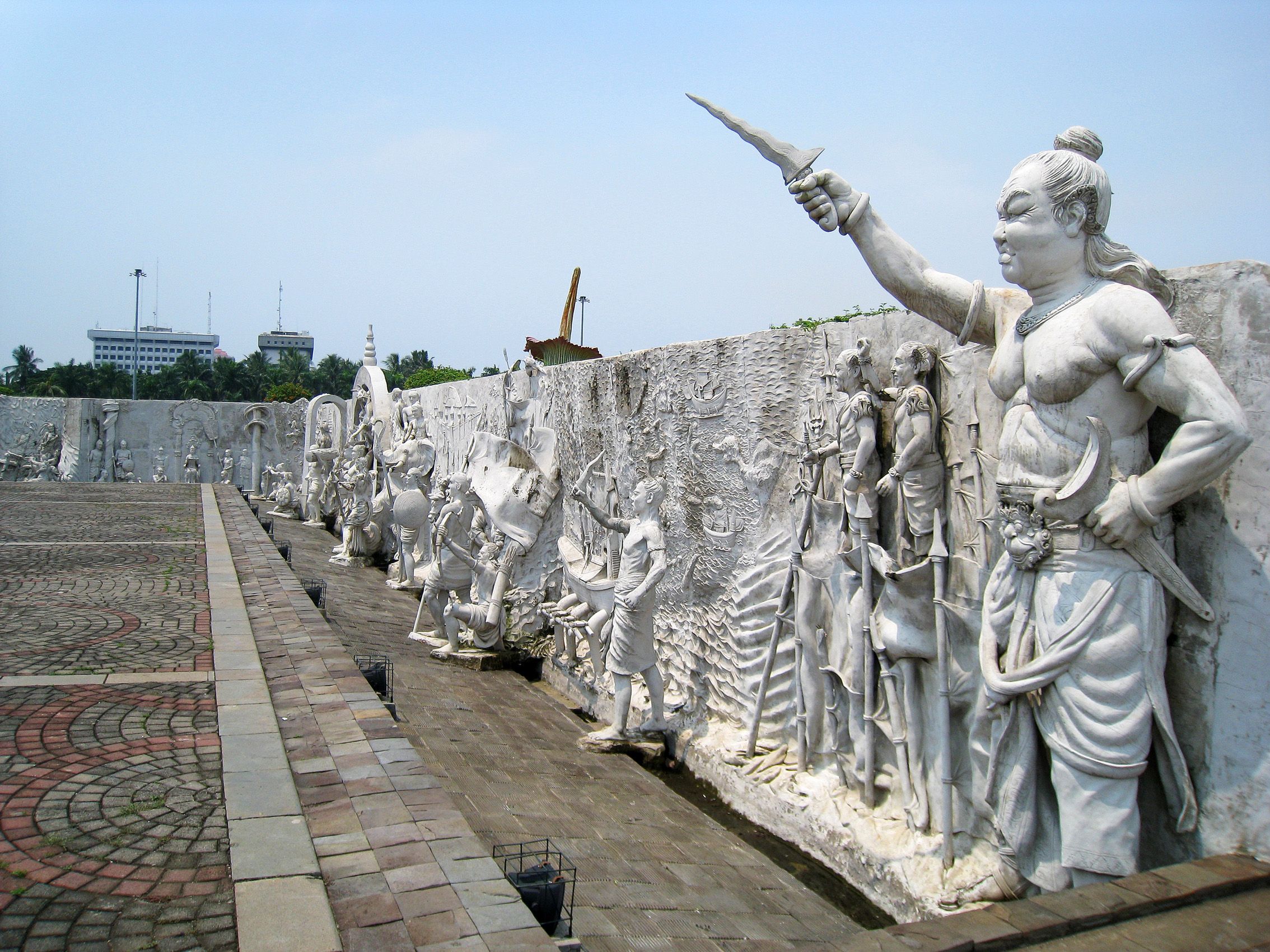

In the outer courtyard around Monas, there are reliefs of Indonesian history, describing events during the Singhasari and Majapahit empires. The reliefs that extend the four walls show the European colonization of the Indonesian archipelago, popular local rebellions, modern Indonesian organizations in the early 20th century, the Japanese occupation in World War II, the Proclamation of Independence, and post-independence developments. The reliefs are made of moulded cement, although some of the statues are damaged and weathered.
The National History Museum
The National History Museum has a display of a total of 51 dioramas in the large marble-lined hall below Monas, displayed around the walls and in the centre of the hall.
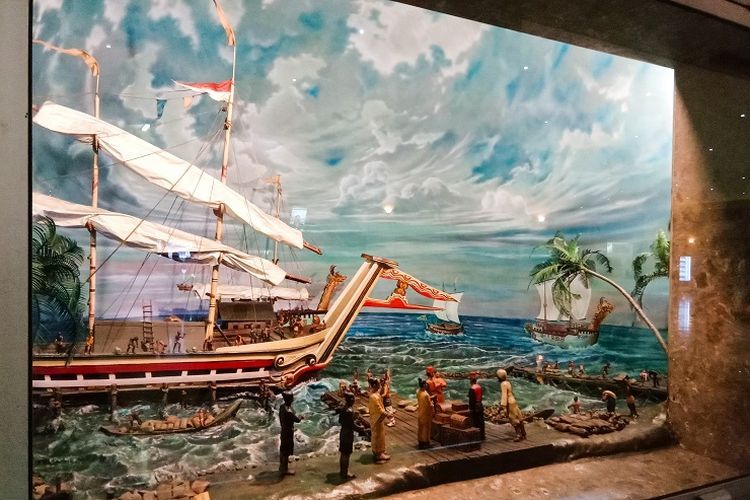
The dioramas begin in the northeastern corner, displaying the scenes from the earliest days of the Indonesian prehistoric, the Sriwijaya and Majapahit eras, followed by the period of European colonization. They continue into the 20th century showing the Japanese occupation, the Indonesian independence, the Indonesian revolution struggle, until the New Order era of Suharto's regime.
The Hall of Independence
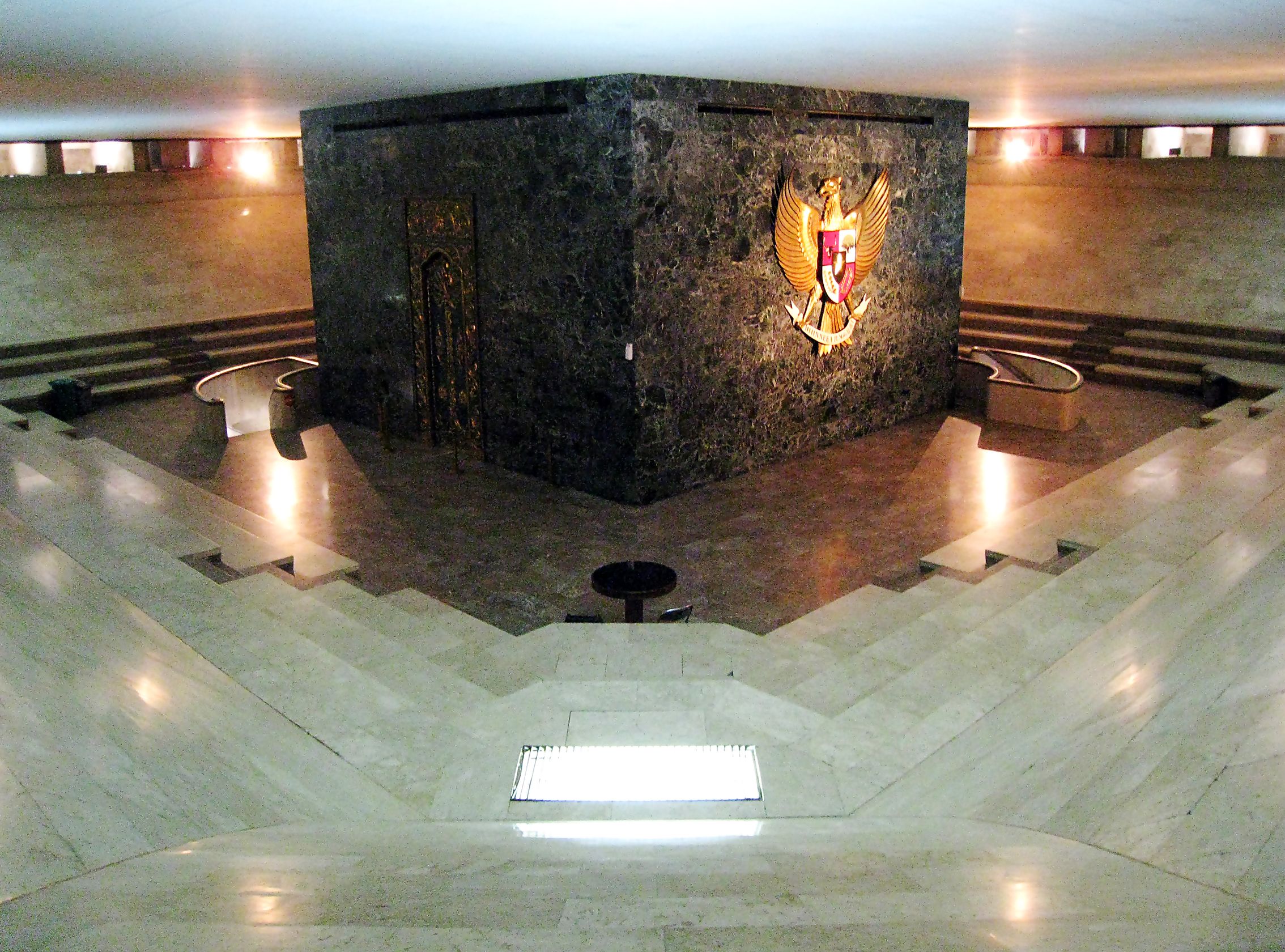
The Hall of Independence is located inside the goblet part of Monas. You can go there through spiral stairs at the north and south doors. It contains various symbols of independence such as the original text of the Proclamation of Independence, stored in a glass case inside the bronze golden door.
On the west side of the inner wall, there are mechanized bronze doors, known as the Gate of Independence. On the southern wall, there is a large bronze gold-coated statue of the national emblem of Indonesia, Garuda Pancasila, weighing 3.5 tons. On the east, there is the most sacred Indonesian flag, Sang Saka Merah Putih, raised originally on 17 August 1945. However, due to the poor condition of the flag, it is no longer displayed. The map of the Indonesian archipelago coated in gold is displayed on the north side.

The Observation Deck and Flame of Independence
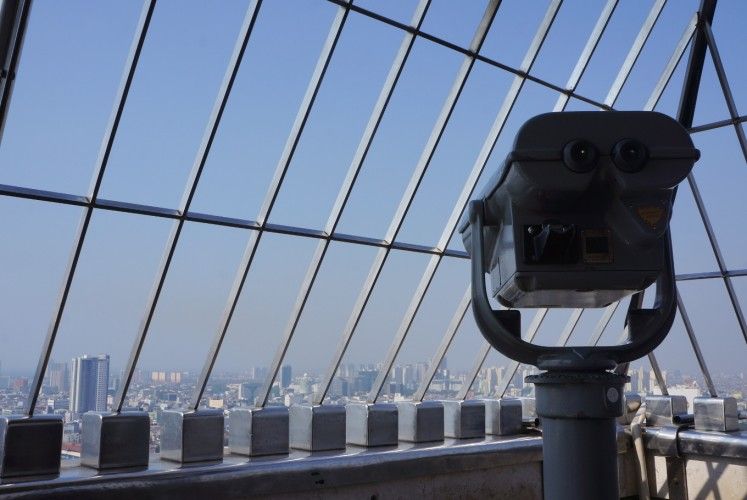
There is a lift on the south side that can carry visitors to the top platform of the Monas. At a height of 115 metres above the ground, the top platform can accommodate about 50 people. In this area, there are binoculars to see the panorama of Jakarta more closely.
At the top of Monas, there is a 14.5-ton bronze Flame of Independence. The base of the flame is a 3 metres high goblet. The bronze flame structure measures 14 metres in height and 6 metres in diameter and it consists of 77 sections. Originally the bronze flame structure was covered with 35 kg of gold foil. Then during the 50th anniversary of Indonesian independence in 1995, the gold foil was recoated and increased to 50 kg. The obelisk and flame symbolize the Indonesian people's struggle for independence.
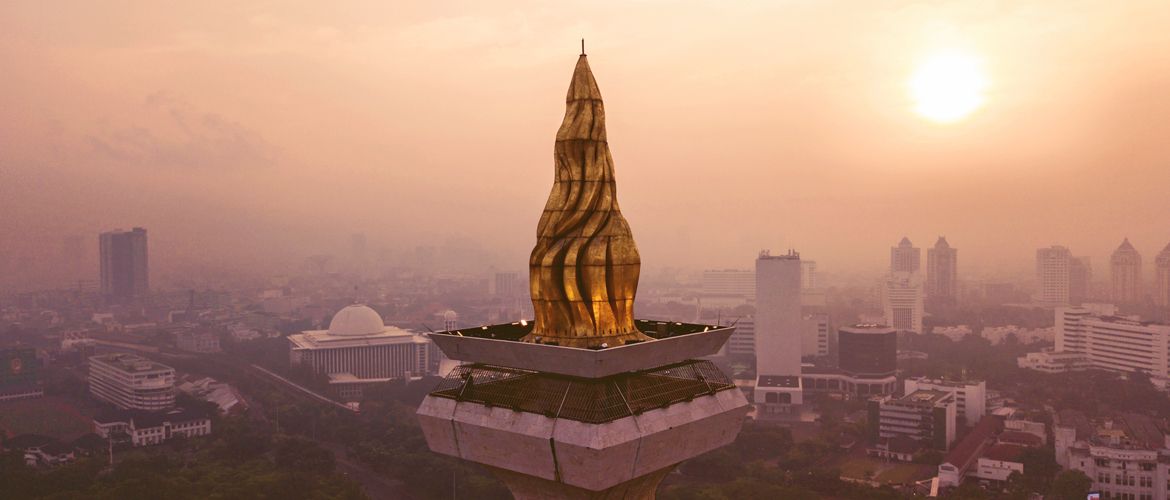
Aside from containing the historical value of Indonesian Independence, the National Monument also becomes the icon of the capital city of Indonesia. When you visit Jakarta, you must visit this National Monument. Located in the centre of the city, it's quite easy to get there. This is a good place to go for a vacation as well as learn the history of Indonesia. Click here for the location!